










































The whole point of an adjustable bed is that it moves — but most people get it and then just guess at the angles. The truth is there's a right position for each problem you're trying to solve, and they're not all the same. Raising your head helps one thing and does nothing for another. Here's exactly how to set the bed for whatever brought you to it.
First, the one rule that makes all of this make sense: head-up changes what happens in your chest and throat. Feet-up changes what happens in your lower body and spine. Once you know which zone your problem lives in, the position is obvious.
For snoring → head up
Snoring happens when your airway relaxes and narrows while you're flat on your back, especially as the night goes on. Tilting the head of the bed up even a small amount opens that airway and takes the kink out of it, so air moves more freely and the snoring quiets down.
- Start with the head raised a gentle 30–45 degrees.
- Adjust down a little if it feels too upright to fall asleep.
- This is also the position that helps a partner sleep through the night, which is half the reason people buy these.

For acid reflux / heartburn → head up (and stay up)
Reflux is gravity working against you: when you lie flat, your stomach is level with your throat, so acid has an easy path up. Raise the head of the bed and you put gravity back on your side — the acid stays down where it belongs.
- Head raised enough that your torso is on a clear incline, not just your neck propped on a pillow (propping only your head can actually make reflux worse by bending you at the stomach).
- Keep the incline through the whole night, not just while falling asleep.
For swelling, tired legs, or circulation → feet up
If your legs and feet feel heavy, swollen, or tired by the end of the day, that's fluid pooling in your lower legs. Raising the foot of the bed lifts your legs above your heart so that fluid drains back instead of sitting in your ankles overnight.
- Feet raised enough that your legs are clearly above heart level.
- Many people pair a slight head raise so they're not sliding downhill — a gentle "cradle."
For lower back pain → both (the zero-gravity position)
Back pain is the one where you want head up AND feet up together. Raising the head a little and the knees/feet a little takes the load off your lower spine and lets it settle into a neutral shape instead of being pressed flat all night. This combination — sometimes called "zero-gravity" — is the position most back-pain sleepers describe as the first thing that actually felt comfortable.
- Head up ~10–15 degrees, knees/feet up just enough that your lower back feels like it "lets go."
- Fine-tune a few degrees at a time over several nights until you stop shifting around.
Quick reference
| Your problem | Position |
|---|---|
| Snoring | Head up |
| Acid reflux / heartburn | Head up (full torso incline, all night) |
| Swollen / tired legs | Feet up (legs above heart) |
| Lower back pain | Head up and feet up (zero-gravity) |
| Just want to read or watch TV | Head up to comfort, feet flat or slightly up |
A couple of setup tips
- Find your angle over a few nights, not in one. Your body adjusts. The "perfect" position usually reveals itself by night three or four.
- Use the bed's memory presets if it has them — once you find your back-pain or reflux position, save it so you're not re-finding it every night.
- A small head raise goes a long way. People tend to over-tilt at first. Gentle and consistent beats dramatic.
One honest note: an adjustable bed is a comfort and positioning tool. Elevating your head or legs can make sleeping with these issues far more comfortable — but if your snoring is severe (possible sleep apnea), your reflux is frequent, or you have swelling that's new or one-sided, those are worth a conversation with your doctor, not just a bed adjustment.
The bases that do this
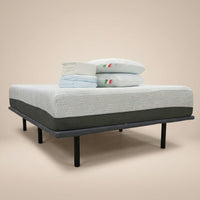
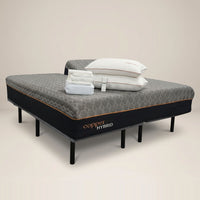
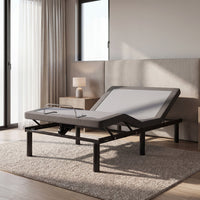
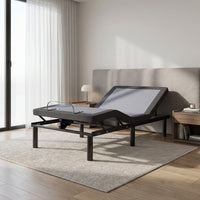
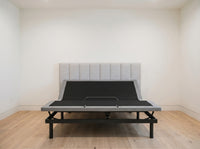
Any of these positions only works if your base can actually raise head and foot independently — some cheaper ones only do the head. Our adjustable bases all do both, with quiet motors — and memory presets on our OS5 and Rise 600 models, so you can save your position once you find it.

See adjustable bases
Independent head-and-foot adjustment — factory-direct from Phoenix.
See adjustable bases — factory-direct from Phoenix →Match the position to the problem and the bed starts earning its keep the first week.
Comfort and positioning vary by person. Adjustable positioning is not a treatment for any medical condition; for persistent pain, reflux, or sleep issues, talk to your doctor.

