


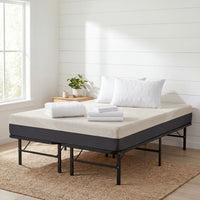
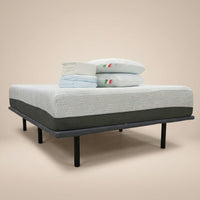
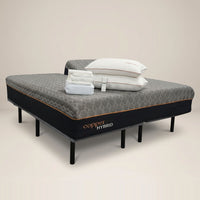
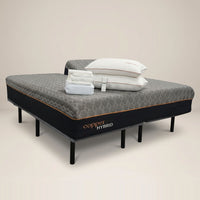
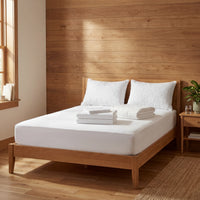








If your lower back is the reason you're reading this, you've probably already tried the cheap fixes. The wedge pillow that slides out by 2 a.m. Stacking regular pillows until your neck hurts instead of your back. Sleeping in the recliner because, somehow, a worn-out chair feels better than your bed.
That last one is the clue. The recliner feels better because it holds you at an angle that takes load off your spine — and a flat mattress can't do that. An adjustable bed can. But "adjustable bed" covers a lot of ground, and most of the features brands brag about have nothing to do with your back. Here's what actually matters when back pain is the whole reason you're buying.
Why position changes back pain in the first place
When you lie dead flat, your lower spine is under constant load and your lumbar curve has nothing supporting it. Tilting the body changes that. Lift the head and knees slightly and you unload the lower back — the spine settles into a more neutral shape instead of being pressed flat all night. This is the same reason a recliner feels like relief. The goal of a good adjustable setup is to give you that relief in an actual bed you sleep in all night, not a chair you doze in.
So when you shop, you're not really shopping for "an adjustable bed." You're shopping for the few things that control position and support. Everything else is a bonus.

The 4 features that actually matter for your back
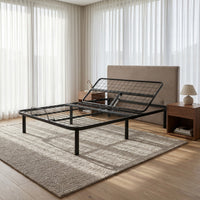
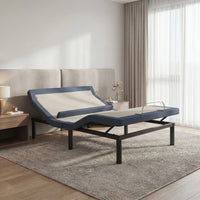
1. Independent head AND foot adjustment. Some cheap bases only raise the head. For back pain you want both — because lifting the feet/knees is often what unloads the lower spine the most. The position where your head is up a little and your knees are bent up a little (sometimes called "zero-gravity") is the one most back-pain sufferers describe as finally comfortable. If a base can't raise the foot, skip it.
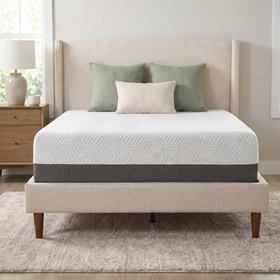
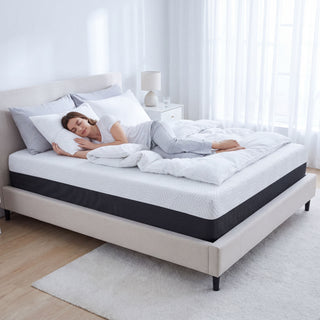
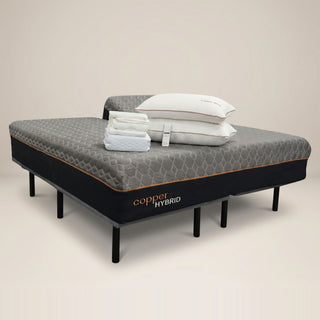
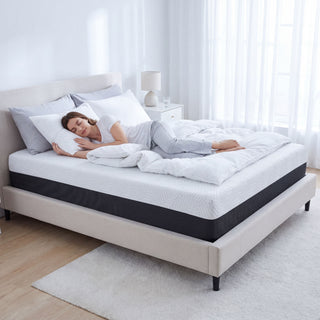
2. A mattress that supports the lumbar — and bends with the base. The base sets the angle; the mattress decides whether your spine is actually supported in that angle. You want a hybrid (foam comfort layers over pocketed coils): the coils give targeted support so your hips and shoulders sink in while your lower back stays held, and the pocketed design flexes cleanly with the base instead of fighting it. A soft, unsupportive mattress on a great base still lets your back sag.
3. Smooth, quiet motors with fine control. You want to find your exact angle and hold it — not jump between three crude presets. Quiet matters too if you adjust during the night and don't want to wake a partner.
4. A weight rating and warranty that match real life. A base rated well above your and your partner's combined weight runs quieter and lasts longer under nightly adjusting. And a real warranty is your insurance that the motor holding your position tonight is still holding it in five years.
What to ignore (it won't help your back)
Brands love to upsell features that have nothing to do with your spine:
- Massage/vibration — pleasant, not a back-pain solution. Don't pay a premium for it expecting relief.
- Under-bed lighting, USB ports, app control — nice, irrelevant to your back.
- "Premium" badge names — the angle and the mattress support do the work, not the brand sticker.
Spend your money on adjustment range and mattress support. Skip the rest.
How to set it up once you have it
Buying it is half the job; positioning it is the other half. A starting point most back-pain sleepers land on:
- Head raised a gentle 10–15 degrees.
- Knees/feet raised just enough that your lower back feels like it "lets go."
- Adjust from there a few degrees at a time over a few nights until you find the spot where you stop shifting around.
The first few nights are experimentation. Once you find your angle, you'll keep coming back to it.
A note worth saying plainly
An adjustable bed is a comfort and positioning tool, not a medical device. It can make sleeping with back pain far more comfortable by changing how your spine is loaded — but if your back pain is new, severe, or comes with numbness, tingling, or leg weakness, that's a conversation for your doctor, not a mattress page. Buy the bed to sleep better; see a professional for diagnosis.
The setup we'd point a back-pain sleeper to
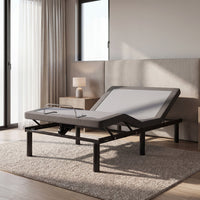
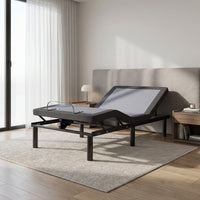
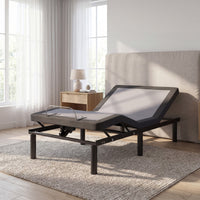
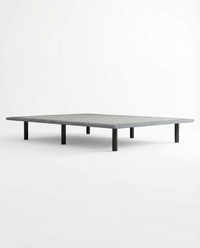
If you want the features above without the showroom markup, the Rise 600 adjustable base, paired with a supportive hybrid, is built for exactly this case: independent head and foot adjustment (so you can hit that knees-up, head-up position), the Rise 600's dedicated lumbar support and pillow-tilt adjustment, a pocketed-coil hybrid that supports the lumbar and flexes with the base, quiet motors, and a real 10-year warranty — factory-direct from Phoenix for well under the furniture-store price on the same class of setup.

See the Rise 600 Adjustable Base
Dedicated lumbar support and head-and-foot adjustment — factory-direct from Phoenix.
See the Rise 600 Adjustable Base — dedicated lumbar support →Comfort and positioning vary by person. Adjustable positioning is not a treatment for any medical condition; for persistent pain, reflux, or sleep issues, talk to your doctor.

