



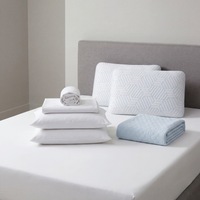







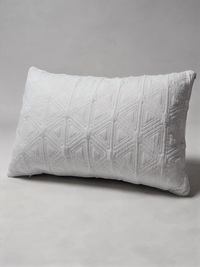
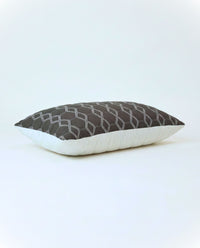
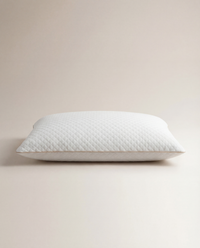

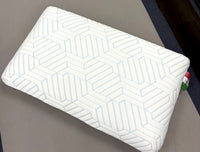














If you wake up with a stiff neck, a sore shoulder, or a dull ache at the base of your skull, the problem usually isn't your mattress. It's the pillow — and specifically, it's the wrong height of pillow for the way you actually sleep.
Here's the rule almost nobody tells you: the best pillow isn't about soft vs. firm. It's about loft — how tall the pillow holds your head — and the right loft is decided entirely by your sleep position. Get that one thing right and the neck pain usually goes with it. Here's how to pick in about a minute.
Why position decides everything
Your spine wants to stay neutral all night — a straight line from your skull through your neck, the same alignment you'd have standing up with good posture. A pillow's only real job is to fill the gap between your head and the mattress so your neck keeps that line.
The size of that gap changes completely depending on how you lie:
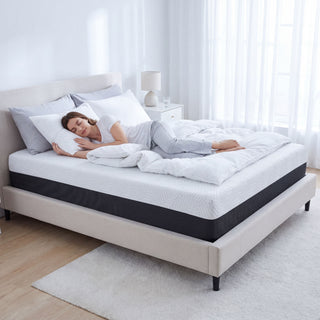
- On your side, there's a big gap — the width of your shoulder — between your head and the mattress. You need a tall pillow to fill it.
- On your back, the gap is small. You need a medium-low pillow.
- On your stomach, there's almost no gap. You need a very thin pillow, or none at all.
Use the wrong loft and your neck bends sideways or cranes back all night. That's the stiff neck. It's a height mismatch, not a "bad pillow."

Match your position to your loft
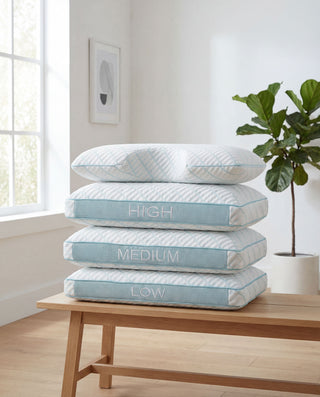
Side sleepers → high loft, firmer. You need to fill the shoulder gap and keep it filled, so the pillow can't collapse under your head's weight. A taller, more supportive pillow holds your head level with your spine instead of letting it sag toward the mattress. This is the position most prone to neck and shoulder pain, and the one where loft matters most. If you sleep on your side and use a flat pillow, that's almost certainly your problem.
Back sleepers → medium loft. You want enough to cradle the natural curve of your neck, but not so much that your chin gets pushed toward your chest. Medium height, with a bit of give under the head and support under the neck.
Stomach sleepers → low loft, soft (or skip it). A tall pillow here cranks your head up and back and torques your neck all night. Go as thin and soft as possible. Honestly, stomach sleeping is the toughest position for your neck — a very low pillow is damage control.
Combination sleepers → medium-high, adaptable. If you move between side and back during the night, split the difference with a medium-high pillow that has enough loft for side sleeping without wrecking your back position. An adaptable fill that shifts with you beats a rigid block.
A 60-second cheat sheet
| You sleep mostly on your… | Pillow loft | Feel |
|---|---|---|
| Side | High | Firmer, supportive — fills the shoulder gap |
| Back | Medium | Balanced — cradles the neck curve |
| Stomach | Low / none | Soft, thin |
| Side + back (combo) | Medium-high | Adaptable |
Find your row. That's your pillow. Everything else — material, cooling, "luxury" labels — is secondary to getting the height right.
One more factor if you sleep hot
If you wake up flipping the pillow to the cold side all night, loft isn't your only issue — heat is. Standard memory foam holds warmth like a sponge. A cooling pillow built to breathe stays neutral instead of turning into a warm brick by 2 a.m. If you run hot, pick the right loft and a cooling build, not one or the other.
Find yours
We build pillows across the loft range so you can match your position instead of forcing your neck to adapt to the wrong height — including a cooling option if you sleep hot.

Shop pillows by sleep position
Pillows matched to how you actually sleep — factory-direct from Phoenix.
Shop pillows by sleep position →If your neck's been stiff every morning, change the loft before you change anything else. It's the cheapest fix in the bedroom and usually the right one.

